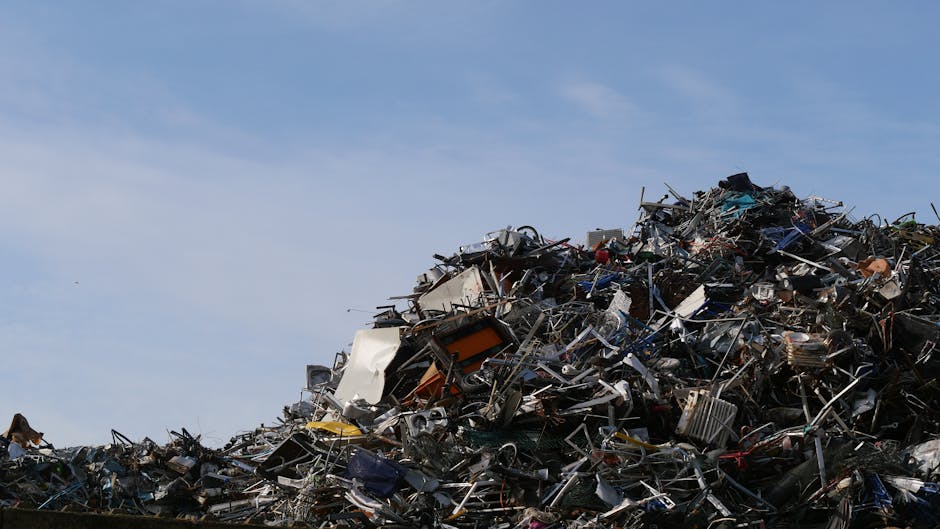
Illegal dumping fines in Twickenham: what you risk
Illegal dumping sounds like one of those problems that happens somewhere else, until it lands on your street, outside your office, or in the alley behind a block of flats. In Twickenham, the risk is very real: if waste is fly-tipped, left where it should not be, or handed to the wrong person, the financial and legal consequences can be painful. This guide explains illegal dumping fines in Twickenham: what you risk, how enforcement usually works, and what practical steps keep you on the right side of it all.
Whether you are clearing a loft, getting rid of old furniture, or dealing with builders' rubble after a renovation, the safest approach is simple: know your duties, choose reputable disposal routes, and keep a few basic records. Sounds obvious. Yet people still get caught out, especially when a cheap deal looks tempting on a busy Saturday morning.
Below, you will find a plain-English breakdown of the penalties, common mistakes, best practices, and the kind of local decision-making that helps you avoid a headache later. If you need a broader service context while planning waste removal responsibly, it can also help to look at options such as waste removal in Twickenham or the company's recycling and sustainability approach.
Table of Contents
- Why illegal dumping fines in Twickenham matter
- How illegal dumping fines in Twickenham work
- Key benefits and practical advantages of doing it right
- Who this is for and when it makes sense
- Step-by-step guidance
- Expert tips for better results
- Common mistakes to avoid
- Tools, resources and recommendations
- Law, compliance, standards and best practice
- Options, methods and comparison table
- Case study or real-world example
- Practical checklist
- Conclusion
- Frequently asked questions
Why Illegal dumping fines in Twickenham: what you risk Matters
Illegal dumping is not just an eyesore. It can block access, attract vermin, create hazards for pedestrians, and leave local residents and businesses picking up the bill. In a place like Twickenham, where streets, shared access ways, and mixed-use areas can be busy and tightly managed, dumped waste stands out quickly. And once it is there, it becomes someone else's problem very fast.
The biggest risk is that people assume enforcement only targets the person who physically left the waste. In reality, responsibility can widen if you arranged collection badly, used an unlicensed waste carrier, or failed to take reasonable steps to check where your rubbish would end up. That is the bit many people miss. You do not need to be standing there with a mattress on your shoulder to end up in trouble.
The consequences can include a fixed penalty, investigation, removal costs, and in more serious situations, prosecution. Exact outcomes depend on the circumstances, the volume and type of waste, and whether there is evidence of intent or negligence. To be fair, a lot of cases start with something ordinary: a garage clear-out, a house move, a broken sofa. Then a quick "cheap collection" turns into a very expensive lesson.
Expert summary: The safest way to avoid illegal dumping fines is not to guess. Check who is taking the waste, keep a record of what was removed, and choose proper disposal routes from the start.
There is also a reputation risk. If waste from your property, business, or renovation appears dumped nearby, neighbours may not care who "technically" did it. They just see your address, your lorry, or your skip bag. In real life, that matters.
How Illegal dumping fines in Twickenham: what you risk Works
At a practical level, enforcement usually follows a chain of evidence. Someone reports the waste, an officer investigates, and details are gathered from the site, the waste itself, or associated documents. That may include photographs, labels, correspondence, or traces that point back to a household or business. It is not always dramatic. Sometimes it is just a council officer comparing names, dates, and what was found in the pile. Annoyingly simple, really.
Illegal dumping fines are often discussed as if there is one universal number. In practice, the penalty can vary based on the authority's process and the nature of the offence. Some cases may begin with a fixed penalty notice; others escalate where the waste is substantial, hazardous, repeated, or linked to organised dumping. The risk is not only the size of the fine but the knock-on costs if you have to deal with clean-up, lost time, or a formal investigation.
Here is the common pattern:
- Waste is abandoned or found in the wrong place. It may be in a layby, on a pavement, near bins, in a communal area, or alongside a wall.
- Evidence is reviewed. Labels, receipts, photographs, CCTV, vehicle details, or witness accounts may help identify who was involved.
- Responsibility is assessed. This is where people get caught out if they used a mate with a van or assumed "some bloke who collects rubbish" was legitimate.
- Enforcement action follows. That can mean a warning, a penalty, or further legal steps depending on the facts.
If you are a business, there can be an extra layer of scrutiny. Commercial waste must be handled carefully, and you should keep your paperwork in order. A business that wants a cleaner, more reliable route may want to review business waste removal alongside its internal disposal process. For office settings, the same logic applies to office clearance where furniture, paperwork, and mixed waste are involved.
One more thing: people often worry about the word "illegal" and assume it only means deliberate fly-tipping. Not quite. Careless disposal, failure to check a carrier, or leaving rubbish in an access area where it later becomes dumped can create risk too. Intent matters, but so does negligence.
Key Benefits and Practical Advantages
It might sound odd to talk about benefits in a topic about fines, but there are real advantages to getting waste disposal right. The first is obvious: you avoid penalties. The second is less obvious but just as useful. You reduce stress. There is a lot to be said for not waking up to a message from a neighbour, or a council notice, or both on the same morning.
Other practical advantages include:
- Cleaner compliance records for households, landlords, and businesses.
- Fewer disputes over who arranged the collection or where waste ended up.
- Better safety around shared entrances, driveways, and communal spaces.
- More predictable costs because legitimate clearance is usually clearer than dealing with a penalty after the fact.
- Better recycling outcomes when waste is sorted and handled properly.
There is also a quiet operational benefit: when you know the process, you make faster decisions. If you are clearing a flat, for example, you can separate furniture, bagged household items, and anything that needs special handling before collection day. That makes life easier and, honestly, less chaotic. Twickenham homes and flats do not always have generous storage space, so efficient planning matters more than people think.
For furniture-heavy jobs, useful supporting pages include furniture clearance and furniture disposal. If you are dealing with a fuller property, you may also find house clearance or home clearance more relevant than a one-off ad hoc arrangement.
Who This Is For and When It Makes Sense
This topic matters to far more people than you might expect. Homeowners, tenants, landlords, letting agents, builders, shop owners, office managers, and anyone clearing a property in Twickenham all have some exposure to waste-disposal risk.
It especially makes sense to pay attention if you are:
- moving house and clearing unwanted items quickly
- renovating a room or carrying out light building work
- emptying a loft, garage, or shed after years of storage
- replacing office furniture or IT equipment
- dealing with bulky items that won't fit in normal household waste
- managing end-of-tenancy clean-outs, void properties, or probate clearances
For smaller domestic projects, a service such as garage clearance or loft clearance can help reduce the temptation to dump items temporarily "just for now". That phrase is often the start of trouble. Just for now becomes a week, then a month, then something blows into a neighbour's garden.
Builders and decorators should be especially careful with rubble, timber, plasterboard, packaging, and mixed construction waste. A dedicated builders waste clearance approach is usually safer than leaving materials to pile up while you "sort it later".
Step-by-Step Guidance
If you want to avoid illegal dumping risk, do not start with the van. Start with the waste. A quick, disciplined process will save you money and hassle.
1. Identify exactly what you need to remove
List the items and group them roughly: furniture, green waste, builders' waste, office items, electricals, general junk, or heavy materials. Some waste is straightforward; some needs extra care. If you are not sure whether items require special handling, treat them cautiously until checked.
2. Separate anything that may need special disposal
Batteries, chemicals, gas cylinders, paint tins, fluorescent tubes, and certain electrical items should not be left mixed in with ordinary rubbish. This is where many people go wrong. It is easy to assume "it's only a few bits", but a few bits can still cause a problem.
3. Choose a legitimate disposal route
Use a reputable clearance or waste service that is clear about what it collects and where it takes waste. If you are comparing service options, a transparent page such as pricing and quotes can be useful when you are trying to balance cost and compliance without guesswork.
4. Check the basics before handing over waste
Ask who is collecting it, how it will be handled, and whether the arrangement fits the type of waste you have. Keep any booking details, receipts, and written confirmations. That little paper trail can matter more than you'd think if questions arise later.
5. Keep the area tidy until collection
Do not leave sacks or loose items on the pavement, in front of bins, or near a shared entrance for too long. Even well-intentioned storage can tip into nuisance or illegal placement if the timing slips. You know how quickly a "temporary" pile gets bigger.
6. Confirm the waste has gone where it should
After collection, make a note of the date and what was removed. For businesses and landlords, this is especially useful. It gives you a simple record if there is ever a complaint, inspection, or tenancy dispute.
Expert Tips for Better Results
Here are the bits people rarely tell you up front, but they make a difference.
- Never rely on price alone. The cheapest offer can become the most expensive if the waste is dumped and traced back to you.
- Ask how mixed waste is handled. Mixed loads are common in real life, but they need proper sorting downstream.
- Keep photos before collection. A quick phone snapshot of what is being removed can help if there is later confusion.
- Think about access early. Narrow Twickenham streets, stairwells, and shared entrances can complicate collections more than people expect.
- Plan for awkward items. Sofas, wardrobes, damaged desks, and garden debris all behave differently on collection day.
A small habit that helps: write down the date, collection type, and what the waste contained. It takes maybe thirty seconds. That tiny admin task can prevent a lot of "we never agreed to that" nonsense later.
If the job is property-wide, pages like flat clearance and house clearance are useful starting points because they align the practical task with proper disposal rather than last-minute improvisation. Truth be told, organised clearances usually feel calmer from the start.
Common Mistakes to Avoid
Most illegal dumping problems are preventable. The challenge is that people repeat a few familiar mistakes.
- Using an unverified carrier. A van and a confident smile do not equal a lawful waste operator.
- Assuming someone else is responsible. If you arranged the removal, your responsibilities may not end at the kerb.
- Leaving waste out early. This is how items get scattered, soaked, or opportunistically picked over.
- Mixing hazardous and general waste. It can complicate disposal and create additional risk.
- Failing to keep records. A simple receipt or note can be surprisingly useful.
- Ignoring repeated small issues. A bit of waste here and there becomes a bigger problem faster than people realise.
There is also a mindset mistake: "It's only a small amount, so it won't matter." That thinking causes more trouble than the amount of waste itself. Small piles can still be traced, and repeated small breaches can signal a pattern. Not ideal, obviously.
Tools, Resources and Recommendations
You do not need a complicated system to reduce your risk. A few practical tools are enough.
- Phone camera: take before-and-after photos of the waste area.
- Simple checklist: keep one for bulky items, builders' waste, and mixed clear-outs.
- Folder for receipts and confirmations: digital or paper, whichever you actually use.
- Internal waste log: useful for businesses, landlords, and managing agents.
- Clear service pages: if you are planning a removal, browse the provider's pages for specific job types, such as garden clearance for outdoor waste or furniture clearance for bulky household items.
For people who want a more structured approach, it can also help to check how a provider handles payment and security before agreeing anything. That does not solve dumping risk on its own, of course, but it is part of choosing a trustworthy operator. The same goes for reading service terms carefully via terms and conditions and reviewing the company background on about us.
Law, Compliance, Standards and Best Practice
This topic touches legal and compliance duties, so caution matters. In the UK, waste has to be handled responsibly, and that usually means making reasonable checks before you hand it over. For businesses, landlords, and anyone arranging larger or repeated clearances, the standard of care should be higher, not lower.
Best practice generally includes:
- using a lawful, traceable disposal route
- keeping written evidence of the arrangement
- avoiding abandoned waste at shared access points
- sorting hazardous items separately
- storing waste safely until collection
- working with providers who explain their process clearly
For businesses in particular, a tidy internal waste process supports wider operational standards. It reduces confusion among staff, helps with site safety, and makes it easier to answer questions if there is ever an issue. You will notice that compliant waste handling tends to be boring in the best possible way. No drama, no surprise costs.
Where health and safety is a concern, sensible handling also matters for manual lifting, broken glass, sharp debris, and access routes. If you are managing a more complex clearance, it can be worth looking at the company's health and safety policy and insurance and safety information so you know the basics are covered.
Options, Methods, or Comparison Table
When people are trying to avoid illegal dumping, they usually compare a few routes: self-disposal, informal collection, a licensed-style clearance service, or leaving items until a convenient time. Only one of those is genuinely safe in most situations. The others are where trouble creeps in.
| Option | Typical benefit | Main risk | Best for |
|---|---|---|---|
| Self-disposal | Direct control over what happens | Time, transport, lifting, and disposal mistakes | Small, manageable loads |
| Informal collection | Often cheap or fast | Highest fly-tipping and traceability risk | Very little, if anything |
| Structured waste removal | Cleaner process and clearer responsibility | Needs a bit of planning and proper booking | Most household and business clearances |
| Leaving waste out | None, really | Public nuisance, contamination, enforcement risk | Not recommended |
If you want the short version: structured waste removal is usually the sensible middle ground. It is not always the flashiest option, but it is the one that keeps you out of avoidable trouble. Especially if your load includes bulky items, mixed debris, or waste from a busy property clear-out.
Case Study or Real-World Example
Imagine a small landlord in Twickenham clearing a one-bedroom flat after a tenancy ends. The property needs a quick turnaround. There is a worn sofa, a broken table, bags of mixed junk, some old kitchen bits, and a few items left in the hallway because there is no space inside. Nothing dramatic, just the sort of job that starts feeling messy at 7:30 on a damp weekday morning.
The landlord is tempted by a cheap collection from someone who says they can "take everything today". The price sounds good. The problem is there is no clear paperwork, no explanation of where the waste is going, and no record of what was collected. Later, if the waste turns up dumped, that lack of evidence becomes the headache.
Now compare that with a more careful approach. The landlord books a proper clearance, separates the items, records what was removed, and keeps the confirmation details. The job is still a bit of a nuisance - let's be honest, clearing a flat always is - but it is controlled, traceable, and far less likely to lead to a fine or dispute.
This is the real lesson: most problems do not begin with bad intent. They begin with speed, convenience, and a little too much optimism.
Practical Checklist
Use this checklist before any waste is handed over or placed outside for collection.
- Have I identified exactly what needs removing?
- Have I separated hazardous or specialist items?
- Do I know who is collecting the waste?
- Have I kept a booking record or receipt?
- Is the waste stored safely and not blocking access?
- Do I understand what happens if the load contains mixed materials?
- Have I chosen a disposal route that feels traceable and legitimate?
- Have I taken quick photos of the waste before collection?
- Is the area clear once the collection is complete?
- Have I kept my notes in case there is a later query?
That last point is easy to skip. Please don't. A minute spent on records can save a surprising amount of grief.
Get a free quote today and see how much you can save.
Conclusion
Illegal dumping fines in Twickenham are not something to brush off as a remote possibility. They are a practical risk tied to everyday decisions: who you hire, how you store waste, what records you keep, and whether you take a few basic precautions. The good news is that the avoidance strategy is straightforward. Be organised, be cautious, and do not let convenience outrank compliance.
If you are clearing a home, flat, garden, garage, loft, or office, the safest route is usually the one that leaves a paper trail and a clear chain of responsibility. That approach protects your wallet, your reputation, and everyone else who shares the street. Simple enough, really. And a lot less stressful than dealing with a fine after the fact.
When waste is handled properly, the whole job feels lighter. Not glamorous, maybe, but lighter. And sometimes that is exactly what you need.
Frequently Asked Questions
What counts as illegal dumping in Twickenham?
Illegal dumping usually means leaving waste where it is not permitted, or arranging disposal in a way that results in rubbish being abandoned. That can include fly-tipping, dumping items in communal areas, or handing waste to someone who does not dispose of it properly.
Can I be fined if someone else dumps the waste I paid them to take?
Potentially, yes. If you did not take reasonable steps to check the person or company collecting your waste, responsibility can still come back to you. That is why records and basic checks matter so much.
How much are illegal dumping fines in Twickenham?
The amount can vary depending on the circumstances, the type of waste, and the enforcement route used. It is safer to think in terms of risk rather than a single fixed number, because the wider costs can include clean-up, time, and further action.
Do small amounts of rubbish still matter?
Yes. Small piles can still be classed as unlawful if they are left in the wrong place. They can also become bigger problems quickly, especially in shared areas or busy streets.
What kind of waste is most risky?
Bulky items, mixed builders' waste, electricals, chemicals, and anything that could be considered hazardous tend to create more risk if handled badly. They often need more careful sorting and disposal.
How can I check if a waste collector is legitimate?
Ask clear questions about what they take, how they dispose of it, and what paperwork they provide. If they are vague, rushed, or unwilling to explain, that is usually a warning sign.
Is leaving rubbish beside bins considered dumping?
It can be. Leaving items beside bins, in front of a property, or in a shared access point can still create enforcement issues, especially if the waste obstructs others or remains there for too long.
What should businesses in Twickenham do differently?
Businesses should keep better records, use more structured waste handling, and make sure staff understand who is responsible for disposal. Commercial waste tends to attract more scrutiny, so a tidy process is worth the effort.
Does photographing the waste help?
Yes, very often. A quick before-and-after photo can help show what was collected and when. It is simple evidence that can reduce confusion later.
What is the safest way to deal with bulky household items?
The safest route is to use a proper clearance method rather than leaving items outside or relying on an informal pickup. Pages such as furniture clearance, house clearance, or flat clearance can help you match the service to the job.
Can dumped waste affect neighbours or landlords too?
Yes, it can. Shared entrances, frontages, and communal spaces often create disputes if waste is left in the wrong place. Clear communication and proper collection reduce that risk.
What is the next sensible step if I need waste removed soon?
Start by listing the items, separating anything special, and choosing a proper removal route. If you are ready to move forward, a clear quote and a sensible schedule are usually the easiest way to keep things safe and straightforward.